
 0:59
0:59My last morning in Murray Hill.
1.7K views · July 20th, 2025
Check out all of CFI's certifications here: corporatefinancialinstitute.pxf.io/MAn5qK Check out the Financial Modeling & Valuation Analyst (FMVA) certification here: https://corporatefinancialinstitute.pxf.io/POyNrN Chapters: 00:00 Introduction 01:32 Myth About Technical Skil...
0:59My last morning in Murray Hill.
1.7K views · July 20th, 2025
 0:59
0:59Making my favorite cold brew in under 10 seconds!
1.3K views · July 20th, 2025
 14:18
14:18Room Tour
0 views · July 12th, 2025
Thanks for watching! If you have any questions, reach out to me on IG: https://www.instagram.com/galbra1th/ In this video, I share a room tour of my apartment in New York City. I lived in the Corinthian Condominium building at 330 E 38th Street located in the Murray Hill neighborhood of Manhattan. Tags: NYC, New York City, Move, Move-In, Manhattan, Murray Hill apartment, apartments, Murray Hill condos, rentals in Murray hill, streeteasy, street easy, The Corinthian, how much does it cost to move to NYC, NYC rent prices, rental prices, Cameron Galbraith, college move in, luxury buildings in NYC, how to move to nyc
 0:32
0:32One trip to San Francisco can change your life! #siliconvalley
2.3K views · April 6th, 2025
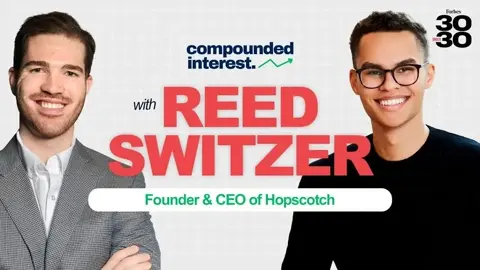 43:58
43:58The Wharton dropout that got his startup acquired. | Reed Switzer, Founder & CEO of Hopscotch
49 views · April 6th, 2025
Reed's LinkedIn: https://www.linkedin.com/in/reedswitzer/ The book that changed my life: https://amzn.to/3ZvZyyF If you have any questions, connect with me on LinkedIn: https://www.linkedin.com/in/cameronjgalbraith/ Email me at: cameron@cjgventures.co Hello everyone and welcome back to my podcast series, Compounded Interest. So far in this series, I've hosted conversations with founders, investors, and business leaders making an impact in this world. Today's guest is no different. In today's episode we’re joined by Reed Switzer. From launching a clothing company as a teen to sharpening his skills in operations at a music-streaming startup while still in high school, Reed’s always followed his own beat— which culminated in him leaving The Wharton School to chase his entrepreneurial vision. Back In 2021, Reed founded Hopscotch, a fintech platform that’s transformed B2B payments for small businesses, making them as fast and fee-free as a Venmo tap. Hopscotch hit over $100 million in payment volume in its first year and grew to serve 4,500 businesses with its sleek, consumer-style design. In 2024, after raising nearly $10 million and earning a spot on Forbes 30 Under 30, Reed’s vision paid off in a major way—Hopscotch was acquired by a multi-billion dollar fintech, cementing its mark on the small-business payments space. From turning his struggles with dyslexia into a competitive advantage, to leaving Wharton to pursue his entrepreneurial vision, Reed has quite the story to tell, and I am excited for you all to hear it. And with that, my conversation with Reed Switzer. Tags: Reed Switzer, Reed Switzer Interview, Reed Switzer Podcast, Reed Switzer Hopscotch, Cameron Galbraith Podcast, Hopscotch interview, forbes 30 under 3o podcast, reed switzer cameron galbraith, alkara, hopscotch acquisition, wharton podcast, reed switzer forbes 30 under 30, forbes 30 under 30 2025, b2b payments, dropping out of wharton, dropping out of penn
 1:28
1:28Why does the U.S. beat Singapore in innovation? #startups
1.5K views · April 5th, 2025
 1:29
1:293 things to avoid when studying for the GMAT exam!
1.3K views · April 3rd, 2025
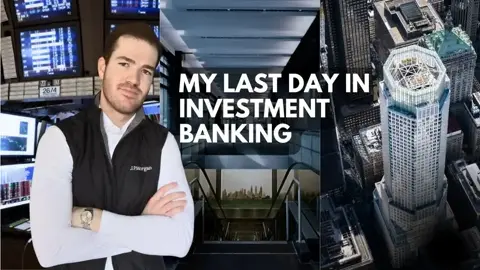 5:32
5:32my last day working in investment banking | vlog
1.4K views · April 2nd, 2025
Come along with me for my final day working in investment banking in New York City! The book that changed my life: https://amzn.to/3ZvZyyF If you have any questions, connect with me on LinkedIn: https://www.linkedin.com/in/cameronjgalbraith/ Email me at: cameron@cjgventures.co Disclaimer: The views in this video are strictly my own, and are not those of my employer. Tags: finance day in the life, wall street day in the life, h&r block 70th anniversary, family office day in the life, venture capital day in the life, NYC finance bro day in the life, virgin hotel NYC, cameron galbraith, NYC vlog, finance vlog, finance day in the life vlog, investment banking vlog, ib blog, ib day in the life, Murray hill, Murray hill vlog, investment banker vlog, wall street vlog, NYC finance day in the life, finance content creator investment banking day in the life, ib day in the life, day in the life of an investment banker, wall street day in the life, wall street vlog, jp morgan vlog, jp morgan day in the life, quitting investment banking, last day in investment banking, finance day in the life, high finance day in the life, cameron galbraith, goldman sachs vlog, finance bro day in the life,
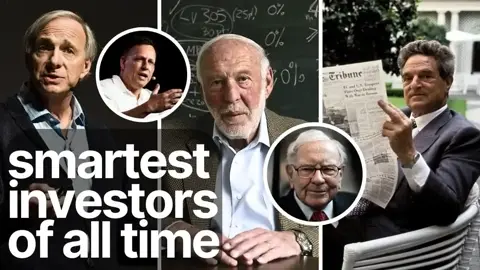 8:35
8:35The smartest investors of all time. (+ what you can learn from them!)
498 views · March 28th, 2025
Visit my partner https://trymintmobile.com/galbraith to get premium wireless starting at $15/mo. SEE TERMS AND CONDITIONS BELOW. Upfront payment of $300 for 12-month plan (equiv. to $25/mo.) req'd. New customer offer for first 12 months only; then full-price plan options available. Taxes & fees extra. Unlimited customers using less than 40GB/mo. will experience lower speeds. Videos stream at ~480p. See https://trymintmobile.com/galbraith for more details. The book that changed my life: https://amzn.to/3ZvZyyF If you have any questions, connect with me on LinkedIn: https://www.linkedin.com/in/cameronjgalbraith/ Email me at: cameron@cjgventures.co In this video, I discuss 6 of the smartest investors of all time and the lessons that you can steal from them! Disclaimer: The views in this video are strictly my own, and are not those of my employer. This video is also for entertainment and educational purposes only. This is NOT financial advice. #wallstreet #finance #financecareers #banking #investmentbanking #privateequity #vc Chapters: 00:00 Introduction 00:53 Warren Buffett 02:06 Jim Simons 04:22 Ray Dalio 05:22 Peter Thiel 06:20 George Soros 07:06 Stanley Druckenmiller 07:55 Conclusion Tags: smartest investors, smartest investors of all time, cameron galbraith, greatest investors of all time, most successful investors of all time, best hedge funds, strongest investors ever, smartest investors ever, what we can learn from the smartest investors, jim simons lessons, peter thiel lessons, best investors on wall street, smartest investors on wall street, greatest investors on wall street, greatest wall street investors Script: Warren Buffett is the king of long-term investing. Jim Simons, known as the Quant King, took a completely different approach. A former mathematician and codebreaker, Simons founded Renaissance Technologies and built the Medallion Fund, which averaged 66% annual returns for over 30 years, making it the most successful hedge fund ever. If you had invested $1,000 in the Medallion Fund at its inception, it would be worth over $20 billion today. Unlike traditional investors, Simons didn’t rely on balance sheets or earnings reports. Instead, he used machine learning, statistical arbitrage, and pattern recognition to identify market inefficiencies and execute high-frequency trades. His team at Renaissance included physicists, computer scientists, and cryptographers—almost no finance professionals.. Ray Dalio, the master of risk and diversification, built Bridgewater Associates, the world’s largest hedge fund, managing over $150 billion in assets. His All Weather Portfolio, designed to perform well in any economic environment, has averaged about 7-10% annual returns with significantly lower volatility than the market. Dalio correctly predicted the 2008 financial crisis, positioning Bridgewater to profit when most investors were losing billions. His philosophy revolves around radical transparency and studying historical cycles to anticipate market moves. One of his most famous concepts is the "economic machine"—the idea that economies function in predictable cycles based on credit, productivity, and psychological factors. Diversification, according to Dalio, isn’t just about owning 50 stocks—it’s about owning assets that perform differently under different conditions. His investment in China and commodities ahead of the 2020s global inflation surge showed his ability to hedge against economic shifts. Peter Thiel, venture capital’s billionaire contrarian, thrives on asymmetric bets—investments with massive upside and limited downside. George Soros is the man who “broke” the Bank of England. Stanley Druckenmiller is the master of betting big when opportunity strikes. While working under Soros, he helped execute the short of the British pound, making over $1 billion in a single trade. As the head of Duquesne Capital, he averaged 30% annual returns over 30 years without a single losing year. One of his greatest trades was foreseeing the 2008 financial crisis and betting against mortgage-backed securities, making billions. Druckenmiller’s philosophy is simple: it’s not about how often you’re right, it’s about how much you make when you are. He follows a macro-investing strategy, analyzing global economic trends and placing high-conviction bets when the market misprices risk. His biggest wins include massive bets on tech stocks in the early 2000s and shorting the dot-com bubble before it burst. Druckenmiller teaches that when conviction meets opportunity, you size up.
 1:19
1:19The 4 Cs of the Singaporean dream! #startups #venturecapital
710 views · March 25th, 2025
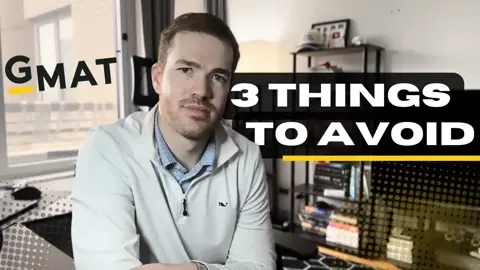 7:06
7:063 things to avoid when studying for the GMAT in 2025!
275 views · March 25th, 2025
Check out Target Test Prep here: https://targettestprep.referralrock.com/l/1CAMERONGAL91/ The book that changed my life: https://amzn.to/3ZvZyyF If you have any questions, connect with me on LinkedIn: https://www.linkedin.com/in/cameronjgalbraith/ Email me at: cameron@cjgventures.co In this video, I discuss the 3 things to avoid when studying for the GMAT focus exam in 2025! Disclaimer: The views in this video are strictly my own, and are not those of my employer. #gmat #gmatexam #gmatfocus #targettestprep #mba #businessschool Script: Mistake #1: Treating the GMAT Like a College Exam Back in college, you probably got away with last-minute cramming and still pulled off decent grades. You could memorize formulas, regurgitate definitions, and grind through an all-nighter with a few gallons of coffee or energy drinks. But the GMAT is a completely different beast. It’s not about memorization—it’s about pattern recognition, logic, and problem-solving under intense pressure. Here’s what makes it tricky: the GMAT is adaptive, meaning it adjusts the difficulty of your questions based on how well you’re doing. The better you perform, the harder it gets. That means brute-force studying won’t cut it. You can’t just memorize a bunch of formulas and expect to ace the Quant section. And you definitely can’t just ‘wing it’ with Verbal if you’re not naturally strong in that area. The best scorers don’t just know the material; they understand how the test is designed. Instead of grinding through endless practice questions, focus on understanding why you’re getting questions wrong. For every mistake, ask yourself: Mistake #2: Ignoring Your Weaknesses Most people naturally want to stick with what they’re good at. If you have a finance background, you probably enjoy the Quant section and dread the Verbal. If you’re more of a writer, you might ace Reading Comprehension but struggle with Data Sufficiency. The problem? The GMAT is all about balance. A perfect Quant score won’t save you if your Verbal drags your overall score down. And vice versa. Business schools don’t just look at one section—they evaluate your total score, and a weak area can bring down your percentile ranking dramatically. So instead of dodging your weak spots, attack them early. If a certain section makes you break out in a cold sweat, put in the reps until you start seeing patterns. One of the best ways to improve quickly is to focus on high-impact topics. In Quant, mastering Number Properties and Algebra will take you much further than spending weeks obsessing over Combinations and Permutations. In Verbal, improving your understanding of parallelism and modifier errors will give you more bang for your buck than worrying about obscure idioms. Prioritize the areas that will give you the biggest score jump. Mistake #3: Burning Out Before Test Day Finance people love to grind—we treat work, networking, and even studying like a 24/7 hustle. But here’s the problem: if you study for six months straight without a break, you’re setting yourself up for burnout. The GMAT isn’t just about how much you know—it’s about staying sharp under pressure. I’ve seen too many people spend months drilling practice problems, only to crash and burn on test day because they were mentally exhausted. If you’re averaging a 720 on practice tests but get a 660 on the actual exam, that’s not a skill issue—it’s a burnout issue. Smart GMAT prep is like training for a marathon: You need high-intensity sessions mixed with recovery periods. You should practice under test-day conditions to build stamina. You have to manage stress and anxiety so you can perform when it counts. Here’s what you should do: Simulate the real test Pace yourself Get your timing down Take care of yourself Tags: GMAT, GMAT focus, GMAT study tips, tips for studying for the gmat, GMAT regrets, GMAT advice, gmat mistakes, common GMAT mistakes, common mistakes on GMAT, GMAT mistakes to avoid, mistakes to avoid on the GMAT, gmat focus exam, target test prep, target test prep GMAT, TTP GMAT, TTP gmat tips, gmat focus study tips, gmat focus study advice
 0:27
0:27The boring daily routine of a $1.3M startup founder!
745 views · March 24th, 2025
 1:09:27
Using AI to transform finance recruiting! | Mike Lukasevicz Interview
384 views · March 12th, 2025
Check out https://www.hireprep.ai/ and use code "CAMERON" for 50% off! GRSFD - http://grsfd.co Mike’s LinkedIn - https://www.linkedin.com/in/mikeluka/ The book that changed my life: https://amzn.to/3ZvZyyF If you have any questions, connect with me on LinkedIn: https://www.linkedin.com/in/cameronjgalbraith/ Email me at: cameron@cjgventures.co Hello everyone and welcome back to my podcast series, Compounded Interest, where I sit down and chat with founders, investors, and business leaders making an impact on this world. Mike Lukasevicz is an entrepreneur who has already founded 3 businesses. He currently operates HirePrep and Axia Growth, where he is revolutionizing both finance recruitment and business development. HirePrep is transforming how candidates prepare for finance careers through its comprehensive ecosystem, featuring AI-powered interview preparation, mentorship programs, and career coaching, alongside two media platforms with thousands of subscribers: The Daily Technical and The Deal Talk. Through Axia Growth, Mike is modernizing deal sourcing and lead generation for financial professionals and businesses, leveraging AI and automation to connect financial advisors and private equity firms with qualified opportunities. There is no doubt about it that Mike is a builder. From working for free as an intern at a venture-backed startup to generating 5-figures of monthly revenue as a solopreneur, Mike has quite the story to tell, and I’m excited to share it with you. I recommend getting your notebooks out because this episode is jam packed with actionable advice for how to go from zero to one on your startup idea with the help of AI and automation. But before getting into the conversation, if this is your first time on my channel, then hi, my name is cameron galbraith and I’m a finance professional based here in NYC. I make videos every week aimed at helping you level up in your career, so make sure to subscribe so you don’t miss an upload. And with that said, here is my conversation with Mike Lukasevics. Disclaimer: The views in this video are strictly my own, and are not those of my employer. #wallstreet #finance #financecareers #banking #investmentbanking #privateequity #vc #startups #ai #auomation Tags: Mike Lukasevicz, Hire Prep, HirePrep, Hire Prep Review, HirePrep Revew, Axia Growth, Mike Lukasevicz Podcast, Mike Lukasevicz Interview, Mike Lukasevicz Cameron Galbraith, ai automation startup, investment banking recruiting, investment banking recruiting podcast, investment banking interview prep, ib interview help, ib interview prep, ai ib interview prep, ai investment banking interview prep
 7:32
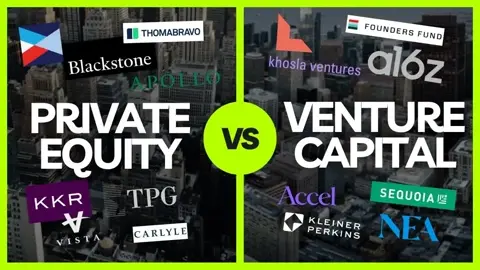
7:32The difference between private equity and venture capital. | Wall Street Simplified
788 views · March 4th, 2025
Boost your online presence with Semrush – get measurable results from your marketing efforts! https://app.partnermatic.com/track/6461HSAjM_aElKMuGT3lLtbjkC1d1_aQaUI0WBgh20GXRkH2VQSZiYtFFvtNu7G2HDb7t5xuZa?url=http%3A%2F%2Fsemrush.com Visit our partner https://trymintmobile.com/galbraith to get premium wireless starting at $15/mo. SEE TERMS AND CONDITIONS BELOW. $45 upfront payment for 3-mo 5GB plan ($15/mo equiv.) required. New customer offer for rst 3 mos only. Taxes & fees extra. See https://trymintmobile.com/galbraith for more details. The book that changed my life: https://amzn.to/3ZvZyyF If you have any questions, connect with me on LinkedIn: https://www.linkedin.com/in/cameronjgalbraith/ Email me at: cameron@cjgventures.co In this video, I discuss the difference between venture capital and private equity! Disclaimer: The views in this video are strictly my own, and are not those of my employer. #wallstreet #finance #financecareers #banking #investmentbanking #privateequity #vc Chapters: 00:00 Introduction 00:48 Venture Capital 01:30 VC Investment Strategy 02:35 VC Value Add 04:19 Private Equity 04:55 PE Deals 06:03 2 and 20 Model 06:26 Payouts 07:20 Conclusion Tags: what is the difference between private equity and venture capital, how are private equity and venture capital different?, what makes venture capital and private equity different?, how do private equity and venture capital differ?, pe vs vc, pe v vc, what is private equity?, what is venture capital?, biggest difference between private equity and venture capital?, is private equity and venture capital the same thing Script: The fundamental difference between PE and VC comes down to what types of companies they invest in, when they invest, and how they operate. Venture Capital firms focus on early-stage startups, investing in young companies with high growth potential, often before they’ve even turned a profit. These are the firms that funded companies like Uber, Airbnb, and Facebook back when they were just ideas. Private Equity, on the other hand, is about investing in mature businesses—companies that are already generating revenue but need restructuring, cost-cutting, or operational improvements to become more profitable. Instead of looking for the next big tech unicorn, Private Equity firms are looking for established businesses they can buy, improve, and sell for a profit. Venture Capital firms invest in startups in exchange for equity, typically taking a minority stake in the company. Since these startups are high-risk, VCs spread their bets, investing in dozens of companies with the hope that a handful will become billion-dollar success stories. A great example of this is Sequoia Capital’s early investment in Google. But Venture Capitalists don’t just provide money—they also guide and mentor the startups they invest in. They help founders with networking, hiring, scaling, and eventually taking the company public or selling it to a larger firm. Their goal is to see the company grow rapidly, increasing its valuation so that when they sell their shares, they can make huge profits. Private Equity firms take a very different approach. Instead of investing in risky startups, they buy out entire companies, often using a strategy called a Leveraged Buyout (LBO). An LBO is like buying a house with a mortgage—PE firms use as little of their own money as possible and borrow the rest to finance the deal. This allows them to make massive acquisitions while risking minimal capital. Once they own the company, they aggressively cut costs, improve operations, and restructure the business to make it more profitable. One of the most famous Private Equity deals in history was Blackstone’s acquisition of Hilton Hotels. In 2007, Blackstone bought Hilton for $26 billion, right before the financial crisis. At the time, many thought it was a terrible deal, but Blackstone restructured Hilton’s operations, improved efficiency, and strategically expanded the brand. In 2013, they took Hilton public, and by 2018, they had fully exited the investment, making a record-breaking $14 billion profit—one of the most successful private equity deals in history. Another great example is KKR’s buyout of RJR Nabisco, one of the most famous deals of the 1980s, and one that was the inspiration behind countless deals and firms ever since. KKR acquired RJR Nabsico in a $31 billion leveraged buyout, which was the largest in history at the time. While the deal itself became infamous due to the power struggle over the company—immortalized in the book Barbarians at the Gate—it showcased how Private Equity firms use debt to take over massive corporations and restructure them for profit. Both Private Equity and Venture Capital firms make money through a model called “2 and 20.” This means they charge a 2% management fee on all the money they manage and take 20% of any profits they generate.
 0:46
0:46DIVOOM Time Gate LED Display Review!
317 views · March 3rd, 2025
 6:04
6:04Trump’s Crypto Revolution: Inside the U.S. Strategic Crypto Reserve
136 views · March 2nd, 2025
The book that changed my life: https://amzn.to/3ZvZyyF If you have any questions, connect with me on LinkedIn: https://www.linkedin.com/in/cameronjgalbraith/ Email me at: cameron@cjgventures.co In this video, I discuss Trump's latest announcement regarding his Strategic Crypto Reserve. Disclaimer: The views in this video are strictly my own, and are not those of my employer. #wallstreet #finance #bitcoin #trump #crypto #digitalassets Script: Earlier today, President Donald Trump revealed plans to create a U.S. Strategic Crypto Reserve through an executive order issued back in January 2025. This reserve will include major cryptocurrencies like Bitcoin (BTC), Ethereum (ETH), Ripple’s XRP, Solana’s SOL, and Cardano’s ADA. In his announcement, Trump emphasized that this initiative is part of his vision to restore the U.S. as a leader in blockchain innovation after what he called “corrupt attacks” on the crypto industry during the Biden administration. —-- Details of the Executive Order The ex order tasked the Presidential Working Group on Digital Assets with evaluating how a national cryptocur reseve could be structured and managed. The resrve will initially be funded using crypto seized in federal law enforcement actions, such as those confiscated from illegal activities. Management of the reserve may fall under the Treasury Department’s Exchange Stabilization Fund, which is traditionally used to stabilize currency markets. The specific cryptocurrencies included—BTC, Ethereum, XRP, Solana, and Cardano—were chosen for their market significance and potential to bring stability to financial systems. Currently, there is no official confirmation about the total monetary value or size of the Reserve. However it is known that the US gov already holds approximately $17b worth of Bit, primarily acquired through law enforcement seizures of illicit assets.The executive order that initiated this effort also suggests that funding for the reserve may be incremental, allowing the government to build its holdings over time without causing market disruptions. Further details about the reserve’s size and funding mechanisms are anticipated during the WH Crypto Summit on Fri Justifications Provided by Trump Trump stated that this move is critical for restoring America’s dominance in financial innovation and blockchain technology. He pointed out that nations like China are rapidly advancing their digital asset strategies, and the U.S. cannot afford to fall behind. By holding reserves of key cryptocurrencies, the U.S. could hedge against economic instability while potentially leveraging gains from rising crypto values to reduce national debt. Trump criticized previous regulatory approaches under the Biden administration, claiming they stifled growth in the crypto sector. He framed this initiative as a way to revitalize an industry he sees as critical for future economic growth. Additionally, Trump argued that other countries are exploring similar reserves and that failing to act now could leave America at a disadvantage in shaping global cryptocurrency standards. How Does This Compare Globally? The United States isn’t alone in exploring cryptocurrency reserves—several countries are already stockpiling digital assets or considering them as part of their financial strategies. As of January 2025, the U.S. is actually the largest holder of Bitcoin globally, with over 207,000 BTC acquired primarily through asset seizures in criminal investigations like the Silk Road case. China comes in second with an estimated 194,000 BTC, followed by nations like the UK and Ukraine with smaller but verified holdings. Meanwhile, countries such as Switzerland and Russia are actively exploring Bitcoin as part of their strategic reserves to diversify assets and reduce reliance on traditional currencies like the U.S. dollar. Switzerland has even proposed a constitutional amendment requiring its central bank to allocate part of its reserves to Bitcoin alongside gold. Similarly, Russia sees Bitcoin as a way to strengthen its economic sovereignty amidst sanctions and geopolitical risks. trump strategic crypto reserve,crypto reserve,trump bitcoin,trump ethereum,trump crypto,u.s. strategic crypto reserve,us strategic crypto reserve,what is the us strategic crypto reserve,Strategic Crypto Reserve,David Sacks,U.S. crypto holdings.,U.S. Ethereum holdings.,U.S. Solana Holdings.,Does the U.S. government own any Bitcoin?,U.S. government Bitcoin holdings.,How much Bitcoin does the U.S. government own?,Does the Federal Reserve own Bitcoin?
No published articles yet.